I'm a paragraph. Click here to add your own text and edit me. It’s easy. Just click “Edit Text” or double click me to add your own content and make changes to the font. Feel free to drag and drop me anywhere you like on your page. I’m a great place for you to tell a story and let your users know a little more about you.
This is a great space to write long text about your company and your services. You can use this space to go into a little more detail about your company. Talk about your team and what services you provide. Tell your visitors the story of how you came up with the idea for your business and what makes you different from your competitors. Make your company stand out and show your visitors who you are.
I'm a paragraph. Click here to add your own text and edit me. It’s easy. Just click “Edit Text” or double click me to add your own content and make changes to the font. Feel free to drag and drop me anywhere you like on your page. I’m a great place for you to tell a story and let your users know a little more about you.
This is a great space to write long text about your company and your services. You can use this space to go into a little more detail about your company. Talk about your team and what services you provide. Tell your visitors the story of how you came up with the idea for your business and what makes you different from your competitors. Make your company stand out and show your visitors who you are.
I'm a paragraph. Click here to add your own text and edit me. It’s easy. Just click “Edit Text” or double click me to add your own content and make changes to the font. Feel free to drag and drop me anywhere you like on your page. I’m a great place for you to tell a story and let your users know a little more about you.
This is a great space to write long text about your company and your services. You can use this space to go into a little more detail about your company. Talk about your team and what services you provide. Tell your visitors the story of how you came up with the idea for your business and what makes you different from your competitors. Make your company stand out and show your visitors who you are.


We the People
"We the People" continues the study and exploration of Western New Yorkers with connections to the Presidency. Often little-known, the people here lived lives that may be overlooked by history. While not professional politicians, these citizens are role models to demonstrate how an individual can make a difference.
(Listed in alphabetical order)
Clark Ezra Carr
May 20, 1836 - February 28, 1919
A friend and political supporter of Abraham Lincoln, a powerful public speaker, and Counsel General of to Denmark, Carr was born in the Boston Hills and attended Springville Academy until 14, when his widowed father moved the family to Chicago. His mother, who died when he was only 3, is buried in Boston, N.Y.
Carr attended Albany Law School, graduating in 1857. Appointed an Honorary Colonel during the Civil War, he was a founding commissioner of Gettysburg National Cemetery and invited Lincoln to give what became his famous Gettysburg Address.
Carr died at 82 and is buried in Hope Cemetery in Galesburg, Illinois.


Felix "Phil" DiRe
March 30, 1941 - May 26, 2021
As leader of the United States Marines Jazz Quartet stationed at the White House, DiRe performed on saxophone during numerous functions, including the weddings of Lyndon Johnson's two daughters.
A graduate of Grover Cleveland High School and the University of Buffalo, DiRe was an instructor in that college's music department, and founder of the summer Jazz at the Albright-Knox concert series.
(source: The Buffalo News, June 4, 2021)

Anna Katherine Green
November 11, 1846 – April 11, 1935
Poet and author Anna Katherine Green is known as the "Mother of the Detective Novel." Her first book, "The Leavenworth Case" (1878), was followed by 37 books over the next 40 years. Her 1915 novel, "The Golden Slipper and Other Problems for Violet Strange" was the first published version of a teenage girl working as an amateur sleuth.
Presidents Theodore Roosevelt and Woodrow Wilson were fans of her books.
Born in Brooklyn, she lived in Buffalo with her husband, noted furniture maker Charles Rohlfs, and their three children.
Harriet Belle Taggart Mack
1866-August 2, 1954
A life-long Buffalonian, Mack and her husband, Norman E. Mack, were influential members of the state's Democratic party. She was a member of the Women’s Board of Managers for the Pan American Exposition, a Presidential Elector for New York from 1932-1944, and personal friend of First Lady Eleanor Roosevelt.
Writing about her October 20, 1944, visit to Buffalo, Roosevelt reported "I came up to Buffalo last night on the midnight train, and my old friend Mrs. Norman Mack met me and gave me a chance for a bath and breakfast at her very comfortable home. This was a wonderful way to start what will be a very busy day."
A week earlier, Mack had resigned from the Twentieth Century Club because she felt a skit performed there was unkind to the First Lady. Mrs. Roosevelt said that she couldn't comment on the skit since she hadn't seen it but that such occurrences were common. She wrote that "...certainly it is a free country, and everyone has a right to an opinion and to the expression of it."
Mack is buried in Forest Lawn Cemetery.
(source: Eleanor Roosevelt, My Day- October 20, 1944)


Indiana Hunt-Martin
May 30, 1922 - September 21, 2020
Hunt-Martin was one of 500 original members of the 6888, nicknamed "The Six Triple Eight," an all-black, all-female postal battalion. During World War II, they traveled to Birmingham, England, where they encountered nearly three years of mail that had backed up. Distributing mail to soldiers — anticipated to take six months — was completed in three months, thanks to their dedication, organization, and commitment. Routing nearly 17 million pieces of mail, the Six Triple Eight increased soldiers' morale by restoring communication with loved ones.
Hunt-Martin was honorably discharged from the U.S. Army in November, 1945. After the war, she worked for the State Department of Labor in New York City, Niagara Falls and Buffalo for 41 years before retiring in 1987. The recipient of numerous honors and medals, she is buried in Oakwood Cemetery in Niagara Falls, New York.
In 2023, the post office at 170 Manhattan Avenue in Buffalo was renamed the Indiana Hunt-Martin Post Office Building in her honor.
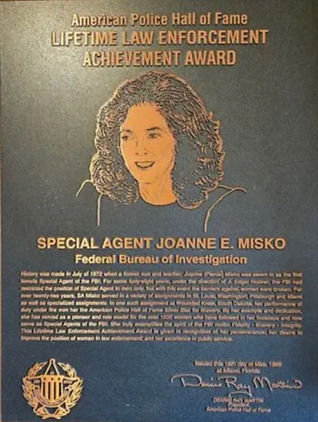
Joanne Pierce Misko
January 1, 1941 - December 13, 2024
A trailblazing FBI agent, Misko spent 10 years as a member of the Sisters of Mercy in Western New York, teaching in Niagara Falls and Orleans, before deciding to join the FBI as a researcher in 1970.
In 1972 — when the role of Special Agent was opened to women for the first time — Misko became one of only two female FBI agents. She served in St, Louis before being part of the detail sent to Wounded Knee, South Dakota, for what became a 71-day standoff with members of the American Indian Movement.
In 1995, she received the Lifetime Law Enforcement Achievement Award from the American Police Hall of Fame.
(source: the New York Times, Dec. 21, 2024)
James Benjamin Parker
July 31, 1857 – April 13, 1907
James Benjamin Parker was born to enslaved parents in Atlanta. As a young man he worked a variety of professions in Chicago, Saratoga, New York City, and Buffalo.
On September 6, 1901, Parker was in line at the Pan American Exposition in Buffalo to shake hands with President William McKinley, when the man in front of him fired two shots. Parker knocked Leon Czolgosz to the ground before a third shot could be fired. Secret Service agents quickly took credit for rescuing the President, who died eight days later. Parker’s role was minimized; he wasn't called on to testify at the trial.
Afterwards, Parker traveled the country working various jobs, speaking to Black cultural groups before falling into poverty. He was arrested in Washington D.C. for “acting queerly” and admitted to a mental institution in Philadelphia.
He died from heart and kidney disease. Because his body was not claimed, it was donated to Jefferson Medical College for dissection by medial students, and afterward was buried in an unmarked grave.


Yvonne Scruggs-Leftwich
June 24, 1933 - September 16, 2022
A civil rights pioneer, Fulbright scholar, urban renewal planner, social justice advocate, author, New York State Commissioner of Housing and Community Renewal in the Cuomo administration, and Deputy Assistant Secretary of Housing and Urban Development in the Carter Administration.
Born in Niagara Falls, Scruggs-Leftwich grew up in Buffalo and attended School 75 and Fosdick-Masten Park High School, where she honed skills to fight racial and gender discrimination. She earned a bachelor’s degree from North Carolina Central University, a master’s degree from the Hubert Humphrey School of Public Affairs at the University of Minnesota, and a Ph.D. in urban planning from the University of Pennsylvania.
Christian Urlrich
Dec. 12, 1839 - March 21, 1906
Private Christian Ulrich, of West Seneca, New York, was one of 26 men from Company E-16th New York Volunteer Cavalry chosen to be part of the hunt for John Wilkes Booth following the assassination of President Abraham Lincoln on April 15, 1865.
After several days on the run, Booth was cornered in a tobacco barn near Port Royal, Virginia, on April 26. Soldiers set the barn on fire, where Booth was shot and killed. The men became known as "Lincoln's Avengers," were heralded as public heroes, and were given financial rewards.
Ulrich used his share to purchase a 14-acre farm on Michael Road in West Seneca, where he raised his family.
A German native, he died at 66 and is buried at Trinity Lutheran Church Cemetery in West Seneca. After his death, his grave was honored with a special marker identifying him as a national hero.
For more, read this 2023 story from Buffalo Tales

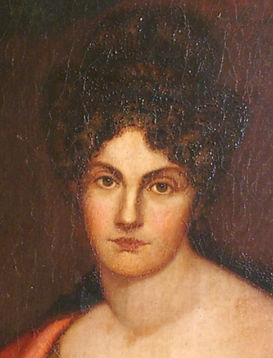
America Pickney Peter Williams
October 12, 1803 - April 15, 1842
Williams was the great-granddaughter of Martha Washington, First Lady of the United States, and a first cousin of Mrs. Robert E. Lee.
In late 1839, America and her husband, Captain William G. Williams, arrived in Buffalo and lived on Washington Street. Captain Williams was here to survey Lake Erie as well as a ship canal route around Niagara Falls.
The couple had two children: Kate Alicia, born in 1832 in Washington D.C., and William Ordon, born in 1839 in Buffalo. After her death, a funeral was held for Williams at St. Paul's Cathedral.
Both husband and wife were buried in the old North Street Cemetery. They were relocated to Forest Lawn Cemetery in 1901.
Marilyn Meissner Young
June 9, 1932 – March 20, 2021
A native of West Seneca, New York, Young moved to Washington D.C. in 1957 with her husband, Kenneth, who was stationed there in the Army.
Beginning work in the Pentagon secretarial pool, she eventually reported directly to the Secretary of the Navy. Two decades after moving to D.C., she became a secretary to First Lady Roslyn Carter in the 1970s. After the Carter administration ended in 1981, Young lived in Buffalo before returning to Washington D.C.
She is buried in Woodlawn Cemetery in Orchard Park.
